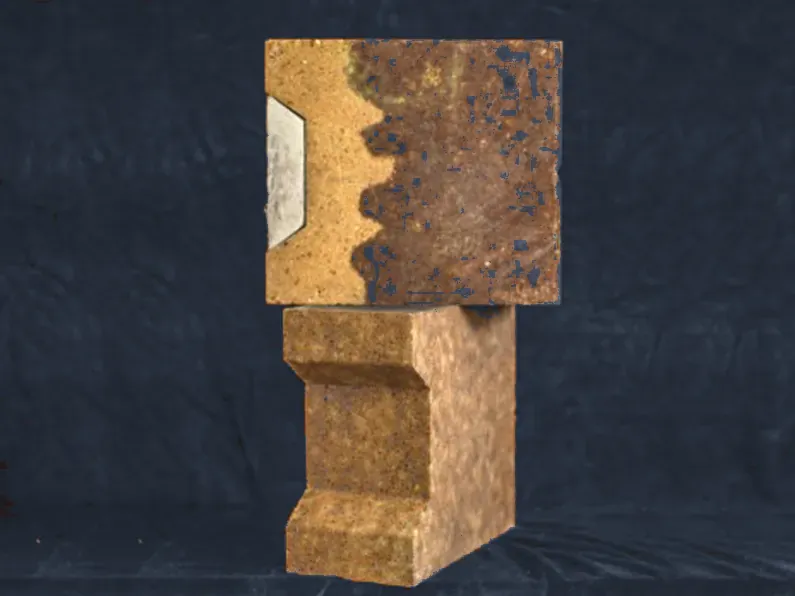
Corundum Series
Special Corundum-Mullite Composite Brick
A corundum-mullite brick (Al₂O₃ ≥ 80 %) with RUL ≥ 1700 ℃ for high-temperature and transition zones of lime, magnesium-metal and bauxite rotary kilns; an insulating triple-layer version is offered on request.
Overview
Corundum-mullite composite brick with Al₂O₃ ≥ 80 % and Fe₂O₃ ≤ 1.0 %, RUL ≥ 1700 ℃ (0.2 MPa, 0.6 % deformation). A triple-layer insulating version is available on request.
Applications
- High-temperature and transition zones of lime rotary kilns
- High-temperature and transition zones of magnesium-metal rotary kilns
- High-temperature and transition zones of bauxite rotary kilns
Technical data
The technical data sheet for this product is available on request. Send us an inquiry and our engineers will provide data for your kiln conditions.
Related products
JX-SN Special Corundum Composite Brick
A chrome-free corundum-based composite brick (Al₂O₃ ≈ 72 %, BD 2.91 g/cm³, RUL T0.6 1696 ℃ in a 2019 third-party test) for transition and high-temperature zones of rotary kilns.
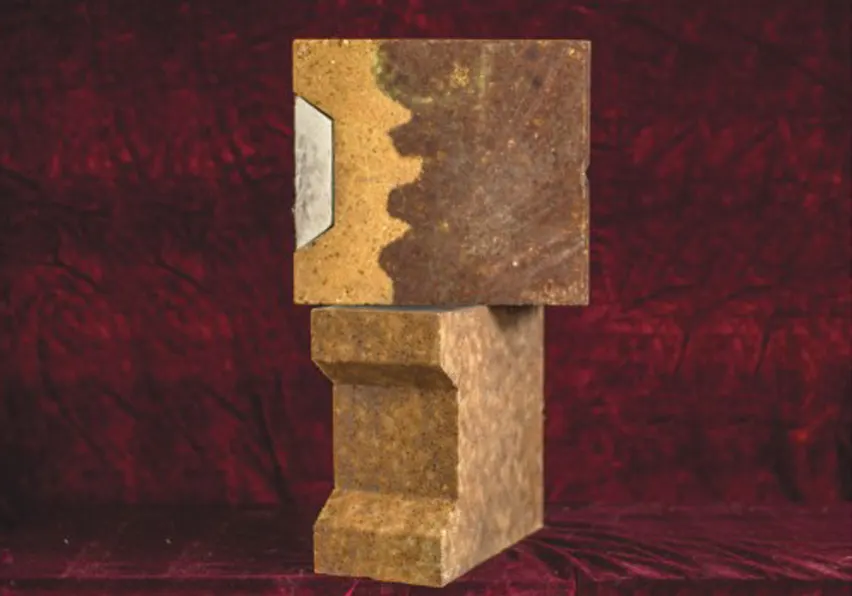
Corundum–Silica-Mullite Composite Brick (for lime & magnesium rotary kilns)
A corundum / silica-mullite composite brick combining wear resistance with lower heat loss for burning zones of lime and magnesium-metal rotary kilns.
Si-Zr Corundum-Mullite Composite Brick
A zirconia-containing corundum-mullite composite brick for burning zones of lime, magnesium-metal and bauxite rotary kilns.
FAQ
Why do RUL values appear as T0.5 or T0.6?
They come from different methods: YB/T 370 (non-differential) reports T0.6, GB/T 5989 / ISO 1893 (differential) reports T0.5, and the two cannot be converted. Jinxing's current data are reported at 0.2 MPa / 0.6 % deformation (T0.6).
Are the data-sheet values guaranteed?
Unless marked "Spec", values are typical and for reference only; each shipment is supplied with its own inspection report.
How do I choose between silica-mullite, phosphate-bonded and corundum composite bricks?
It depends on the dominant wear mechanism in each zone (temperature, chemical attack, abrasion). Silica-mullite and phosphate-bonded wear-resistant bricks are typically used in transition, cooling and medium-temperature wear zones; corundum-based products are used where temperature and slag attack are severe. Send us your kiln data and our engineers will propose a zone-by-zone design.
Ask about this product
Tell us the kiln, zone, brick shapes and quantity. We reply within 1 business day.